Showing posts with label Defence Acquisitions. Show all posts

Saturday, 25 October 2014

India clears Defence Projects of Worth Rs. 80,000 Cr

French Scorpene SSK Submarine

NEW DELHI: Defence Minister Arun Jaitley led Defence Acquistion Council on Saturday gave approval to the defence procurements of worth Rs. 80,000 crore.

Major long pending proposals have just seen the light with the defence ministry giving clear signal to the navy’s Project 75 India i.e construction of six new submarines with the cost of approximately Rs. 50,000 crore.


Navy’s depleting under water capability has been a serious cause of concern especially after accident o INS Sindhurakshak and INS Sindhuratna. Besides, submarine, defence ministry also cleared crucial anti tank guided missile system for the Indian army.

Israeli Spike has been selected over US’s Javelin to buy third-generation Spike ATGM systems including 321 missile launchers, 8,356 missiles and 15 training simulators along with transfer of technology with an estimated cost of Rs 3200 crore.

The Army would mount these ATGMS on its infantry combat vehicles. Order for production of 363 BMP-2 for army unit from Ordinance Factory Board has also been approved alongwith Rs. 1850 crore deal for procurement of 12 additional Dornier surveillance and reconnaissance aircraft for the navy. Army’s another proposal of worth Rs. 662 crore for buy Radio relay container.

“National security is of paramount concern for the government and all hurdles and bottlenecks in procurement process should be endorsed expediently,” Jaitely said while taking first major meeting with the defence ministry officials after recuperating from illness.

Friday, 28 March 2014

IAF aircraft C-130J Super Hercules crashes near Gwalior, 5 killed

IAF LM C-130J Super Hercules

NEW DELHI: A recently acquired C-130J transport aircraft of the Indian Air Force crashed 72 miles west of Gwalior airbase on Friday morning, killing at least five personnel on board.

The IAF has no official word yet on how many personnel were aboard the aircraft.

The crash of the four-engine US made aircraft has baffled experienced pilots, given its safety records and extreme agility. One senior air force pilot said the accident was "bizarre", and speculated that either the crew was incapacitated or a fire broke out aboard the plane.


Rescue operations are underway at the crash site, air force sources said. "The aircraft was airborne from Agra at 10am for a routine flying training mission. A court of inquiry has been ordered to investigate into the cause of the accident," the IAF said in a statement.

The crash took place in Karauli district in Rajasthan, some 72 miles from Gwalior, where it was due to land.

The IAF started inducting C-130J in February 2011 and has half a dozen of them in service. It is also set to induct another six of them.

The C-130J is among the most agile aircraft in service today, and has an impressive safety record. The transport aircraft is meant for an array of operations including movement of Special Forces, and difficult landings. It was highly effective in rescue operations in Uttarakhand after the flash floods, and has proven its capability to carry out landings on remote airstrips close to China border. Both these have exhibited the flexibility and capability of the American aircraft, manufactured by Lockheed Martin.
Starting its history sometime in the 1950s with the US military, C-130 is among the world's most recognizable military aircraft that has participated in numerous military campaigns and in service with several militaries.

Though several C-130s have crashed during Vietnam war, the aircraft is reputed for its reliability. Last time South Asia saw a C-130 crash was when a C-130 aircraft of the Pakistan air force carrying Pakistani dictator General Zia-ul-Haq and the US ambassador Arnold Lewis Raphel were killed when it crashed on August 17, 1988.

Friday, 15 November 2013

Wait over: INS Vikramaditya set tojoin Indian Navy on Nov 16


Defence Minister, A.K. Antony, will induct the long-delayed aircraft carrier INS Vikramaditya,
designed to boost India’s maritime capabilities, at a shipyard in Russia on Saturday. Antony will leave for Russia tomorrow with a high-level delegation, including Defence Secretary, R.K. Mathur, on a four-day visit during which, apart from commissioning the aircraft carrier, he will also co-chair the India-Russia Inter-Governmental Commission on Military Technical Cooperation (IRIGC-MTC) with his Russian counterpart, Sergey Shoigu.


Contracted for in 2004, during the NDA regime, the vessel has been delayed by over five years
and has seen several time and cost-overruns in the last nine years. “The commissioning ceremony will take place at Sevmash Shipyard, Severodvinsk, on Saturday and the IRIGC-MTC meeting will take place in Moscow on Monday,” a Defence Ministry release said.

Russian Deputy Prime Minister Dmitry Rogozin will be attending the commissioning along with
Defence Minister Shoigu. For the IRIGC—MTC, Antony’s delegation includes Secretary (Defence Production) GC Pati, DG (Acquisition) SB Agnihotri, and senior officers of the armed forces. At the meet, the two sides will discuss a broad spectrum of issues related to ongoing and proposed defence projects and defence cooperation between the two countries. The two sides will also exchange views on bilateral concerns related to regional and global issues, the release said.

Monday, 21 October 2013

China's arms industry makes global inroads

Chinese HQ-9 long range missiles

From the moment Turkey announced plans two years ago to acquire a long-range missile defense system, the multi-billion-dollar contract from a key NATO member appeared to be an American company's to lose.

For years, Turkey's military had relied on NATO supplied Patriot missiles, built by the American companies Raytheon and Lockheed Martin, to defend its skies, and the system was fully compatible with the air-defense platforms operated by other members of the alliance.


There were other contenders for the deal, of course. Rival manufacturers in Russia and Europe made bids. Turkey rejected those - but not in favor of the American companies. Its selection last month of a little-known Chinese defense company, China Precision Machinery Export-Import Corporation, stunned the military-industrial establishment in Washington and Brussels.

The sale was especially unusual because the Chinese missile defense system, known as the HQ-9, would be difficult to integrate with existing NATO equipment. China Precision is also subject to sanctions from the United States for selling technologies that the United States says could help Iran, Syria and North Korea develop unconventional weapons. A state department spokeswoman said this month that American officials had expressed to the Turkish government "serious concerns" about the deal, which has not yet been signed.

Industry executives and arms-sales analysts say the Chinese probably beat out their more established rivals by significantly undercutting them on price, offering their system at $3 billion. Nonetheless, Turkey's selection of a Chinese state-owned manufacturer is a breakthrough for China, a nation that has set its sights on moving up the value chain in arms technology and establishing itself as a credible competitor in the global weapons market.

"This is a remarkable win for the Chinese arms industry," said Pieter Wezeman, a senior researcher at the Stockholm International Peace Research Institute, which tracks arms sales and transfers.

In the past, Chinese companies have been known mainly as suppliers of small arms, but that is changing quickly. From drones to frigates to fighter jets, the companies are aggressively pushing foreign sales of high-tech hardware, mostly in the developing world. Russian companies are feeling the greatest pressure, but American and other Western companies are also increasingly running into the Chinese.

"China will be competing with us in many, many domains, and in the high end," said Marwan Lahoud, the head of strategy and marketing at European Aeronautic Defense and Space, Europe's largest aerospace company. "Out of 100 campaigns, that is, the commercial prospects we have, we may have the Chinese in front of us among the competitors in about three or four. They have the full range of capabilities, and they are offering them."

The Stockholm institute released a report this year on global weapons transfers that found the volume of Chinese conventional weapons exports - which included high-end aircraft, missiles, ships and artillery - jumped by 162 percent from 2008 to 2012, compared with the previous five years. Pakistan is the leading customer. The institute now estimates that China is the fifth-largest arms exporter in the world, ahead of Britain. From 2003 to 2007, China ranked eighth.

China's foreign arms sales are also rising fast in dollar terms. According to IHS Jane's, an industry consulting and analysis company, Chinese exports have nearly doubled over the past five years to $2.2 billion, surpassing Canada and Sweden, and making China the world's eighth-largest exporter by value.

The total global arms trade revenue in 2012 was estimated to be $73.5 billion, and the United States had a 39% share, according to IHS Jane's.

Xu Guangyu, a retired major general in the People's Liberation Army and director of the China Arms Control and Disarmament Association, said in an interview that the push by Chinese companies to develop and sell higher-tech arms was "a very normal phenomenon."

"In arms manufacturing, China is trying to increase the quality and reduce price," he said. "We're driven by competition."

Xu said that besides pricing, Chinese companies had another advantage: they do not "make demands over other governments' status and internal policies." He added: "Our policy of noninterference applies here. Whoever is in the government, whoever has diplomatic status with us, we can talk about arms sales with them."

Chinese officials know that China's encroachment on Western-dominated military markets raises concerns. When asked about the missile-defense sale to Turkey, a Chinese foreign ministry spokeswoman said, "China's military exports do no harm to peace, security and stability," and do not "interfere with the internal affairs of recipient countries."

The largest Chinese arms production companies, all state-owned, declined interview requests. Their finances are opaque, though there are some statistics on their Web sites and in the state news media.

The China North Industries Group Corporation, or the Norinco Group, said on its Web site that its profits in 2012 were 9.81 billion renminbi, or about $1.6 billion, a 45 percent increase from 2010. Its revenues in 2012 were 361.6 billion renminbi, or about $59 billion, a 53 percent increase over 2010. Another company, the China South Industries Group Corporation, or CSGC, said on its Web site that it had profits of about $1 billion in 2011, on revenue of about $45 billion, both big increases over 2008.

China's investment has been heaviest in fighter planes - both traditional and stealth versions - as well as in jet engines, an area in which China had until now been dependent on Western and Russian partners, said Guy Anderson, a senior military industry analyst in London with IHS Jane's.

"China has been throwing billions and billions of dollars at research and development," he said. "They also have a strategy of using the gains they get from foreign partnerships to benefit their industrial sector. So they should not have any trouble catching up with their Western competitors over the medium term, and certainly over the long term."

He estimated that China was still a decade away from competing head-to-head with Western nations on the technology itself. But Chinese equipment is priced lower and could become popular in emerging markets, including in African and Latin American nations.

"We are in an era of 'good enough' - the 90 percent solution that will do the job at the best possible price," Mr. Anderson said. "In some cases, that may even mean buying commercial equipment, upgrading it slightly and painting it khaki."

New customers for Chinese equipment include Argentina, which in 2011 signed a deal with the Chinese company Avicopter to build Z-11 light helicopters under license. Mass production for the Argentine military began this year, and 40 helicopters are expected to be built over the next several years. The value of the contract has not been made public.

Companies selling drones, another focal point in the Chinese arms industry, are ubiquitous at arms and aviation shows. At an aviation exposition in Beijing in late September, one Chinese company, China Aerospace Science and Technology Corporation, had on display a model of a CH-4 reconnaissance and combat drone, with four models of missiles next to it.

Though the drone had been "designed for export," one company representative said, there were no foreign buyers yet. The company was still being licensed by the government to sell the aircraft abroad. He added that the drone was not yet up to par with some foreign models, and that the engine was a foreign make, though other parts - including the missiles - had been developed in China.

The Aviation Industry Corporation of China, or AVIC, had on display a model of a Wing Loong, the best-known Chinese drone export, which sells for about $1 million, less than similar American and Israeli drone models. An article in People's Daily said the export certificate for the Wing Loong, or Pterodactyl, was approved in June 2009, and it was first exported in 2011.

At the Paris Air Show in June, Ma Zhiping, president of the China National Aero-Technology Import and Export Corporation, told Global Times, another state-run newspaper, that "quite a few countries" had bought the Wing Loong, which resembles the American-made Predator. Clients were in Africa and Asia, he said.

Two fighter jets made by Chinese companies are being closely watched by industry analysts and foreign companies for their export potential. One is Shenyang Aircraft's J-31, a fighter jet that Chinese officials say has stealth abilities. A People's Daily report last month said that the J-31 was being made by Shenyang, an AVIC subsidiary, mostly for export, citing an interview with Zhang Zhaozhong, a rear admiral in the Chinese Navy. In March, the airplane's chief designer, Sun Cong, told People's Daily that the J-31 could become China's main next-generation carrier-borne fighter jet.

The other jet is the JF-17, a less-sophisticated aircraft that an American official said had been in the works for about two decades in an "on-again, off-again" project. The jet was ostensibly the product of a joint venture between Pakistan Aeronautical Complex and China's Chengdu Aircraft Industry Corporation, also an AVIC subsidiary, but China did the real work, said the official, who spoke on the condition of anonymity because of the secrecy surrounding military projects. So far, Pakistan is the only client, and the official said he believed Pakistan had made a "political decision" to buy it.

China is Pakistan's biggest ally, and each relies on the other to help counter India. Besides the JF-17, the two nations have had official joint production agreements on a frigate, a battle tank and a small aircraft.

A defense official from Japan, a territorial rival of China that monitors its arms trade closely, said Chinese jets still had big shortcomings that could hurt international sales; most notably, China cannot make reliable engines or avionics, he said. The JF-17 uses a Russian engine.

"I believe they can make a few very good engines in the laboratory, but they can't make it in the factory, kind of mass produce it in factories, because of lack of quality control and maybe experience," he said.

He added that Chinese engineers had been trying to develop an engine, the WS-10, a copy of a Russian model, but had been having problems.

It is not uncommon for customers to overcome weaknesses in Chinese manufacturing by buying Chinese platforms and outfitting them with better Western equipment. Algeria placed an order last year for three Chinese corvettes, but is outfitting the ships with radar and communications equipment from Thales Nederland, a unit of the Thales Group, based in France. Thailand has been awarding contracts to the Saab Group, based in Sweden, to upgrade Chinese-built frigates, said Ben Moores, a senior analyst at IHS Jane's.

This year, a Chinese company was competing against foreign counterparts, including at least one American company, for a $1 billion Thai contract for naval frigates, but lost to Daewoo of South Korea.

As China moves to catch up with established Western rivals, competing not only on price but also with comparable technology, Hakan Buskhe, chief executive of Saab, said his company and others would be likely to find themselves under pressure to cut their own research and development costs to lower pricing - a trend that could benefit North American and European governments looking to squeeze more ability out of shrinking defense budgets.

"We need to be able to develop more for less," he said.

Edward Wong reported from Beijing and Tokyo, and Nicola Clark from Paris. Gerry Doyle contributed reporting from Hong Kong. Patrick Zuo and Bree Feng contributed research from Beijing.

Thursday, 17 October 2013

Antony to take up issues related to FGFA project with Russia

Source: PTI

Not happy with its share of work in the multi-billion dollar Fifth Generation Fighter Aircraft (FGFA) project with Russia, India is expected to flag the issue with that country during Defence Minister A K Antony’s visit there next month.
Though India is investing 50 per cent of the cost of the multi-billion dollar programme, its work share in the research and development and other aspects of the programme at the moment is only around 15 per cent, IAF officials said here.
The Defence Minister is expected to flag this issue during his Russia visit beginning November 15 as this will have an impact on India’s indigenous capabilities to develop such an advanced fighter aircraft, they said.
The IAF expressed its objection over the issue at a CII event on energising aerospace sector in India.
“We have a major opportunity in the FGFA programme. At the moment it is not very much in favour of Indian development. We are flagging it through the Government. It should be much more focused towards indigenous development capability,” IAF Deputy Chief Air Marshal S Sukumar said here.
The senior IAF officer was commenting on the programme and the opportunities that it could provide for the Indian defence sector.
The FGFA is a joint venture programme between India and Russia and its preliminary design phase was completed recently.
The programme is expected to cost over 1.5 lakh crore to the Government. The two sides are now in discussion over the main Research and Development part of the programme, which is expected to take another year to be concluded.

India to finalize $15 billion Rafale deal by March, Indian Air Force says

Source: REUTERS
                                      
India will finalize a $15 billion deal to buy 126 Rafale fighter jets from France’s Dassault Aviation by March 2014, an Indian Air Force official said on Thursday, after the deal had been held up by differences over local manufacturing.
India picked the Rafale for exclusive negotiations in January 2012 after a bidding contest against Eurofighter Typhoon aircraft, made by a consortium involving EADS, Finmeccanica and BAE Systems.
However, there were differences over the role of India’s state-run Hindustan Aeronautics Ltd in manufacturing the jets.
Air Marshal S Sukumar, deputy chief of Air staff, told an aerospace conference the deal would be signed within the current financial year, according to a statement issued by conference organizer, the Confederation of Indian Industry.Under the deal, Dassault is expected to send 18 ready-made jets and would manufacture the rest in IndiaHindustan Aeronautics will be its lead partner.
Dassault had earlier expressed doubts about the ability of the local partner to make such a sophisticated fighter. Hindustan Aeronautics has been developing a light combat aircraft since the early 1980s with no success so far.
A spokesman for Dassault declined to comment. The French company is still hoping to finalize the deal by the end of the 2013.
India’s government wants to encourage Indian companies to partner with foreign suppliers to reduce its reliance on imports and boost a domestic defence industry that is dominated by underperforming public sector companies.
A separate tender to buy and build 56 military transport planes at an estimated cost of 119 billion rupees has been extended by two months, Sukumar also said. The defence ministry launched the tender in May to replace an ageing fleet of Avro jets.
The ministry had originally said the transport planes deal must be struck between a foreign supplier and an Indian private company. However, heavy industries minister Praful Patel said last week that public-sector firms already making products for the armed forces should have been allowed to take part in the bidding.
The defence ministry has said it will look into Patel’s complaint, potentially delaying the tender. Many of India’s foreign arms purchases run into long delays because of accusations of corruption and bureaucratic complications.

2nd Nuclear Submarine Lease likely to highlight in Indo-Russian Summit


At least half a dozen bilateral agreements, including a big ticket deal on the lease of a nuclear submarine are expected to be signed at the 14th Indo-Russian annual summit in Moscow on October 21, key officials involved in the negotiations (which are still going on) said.

India has been looking to take a second nuclear submarine on lease from Russia and talks are believed to have progressed well. The two sides are keeping budget-level secrecy on this subject. The issue is likely to dominate discussions between Singh and Putin during a restricted meeting where the two principals meet with select aides.


Normally, sensitive subjects like nuclear submarines are not announced formally. It is yet to be seen whether the subject will find a mention in the Joint Statement to be released after the visit but a broad framework on defence and scientific cooperation is likely to be unveiled after the talks.

The only nuclear submarine with the Indian Navy currently, INS Chakra, has also been taken on lease from Russia. The boat joined active service in the Indian Navy in April 2012. The ten-year lease has cost India almost a billion dollars.

The Indian Navy personnel are quite satisfied with the leased nuclear submarine as the 80-personnel capacity boat can remain under water as long as human endurance allows. Another operational advantage of the boat is that its noise level is virtually zero which enhances its stealth qualities.

The second nuclear submarine lease is likely to cost considerably more. Indian Foreign Secretary Sujatha Singh is scheduled to hold a press conference on Manmohan Singh’s visit to Russia and China during which she would inevitably be asked questions about the second nuclear submarine lease plans.


Defence ties ::
Government-to-government route, comparable to the American Foreign Military Supplies (FMS) programme, is being actively considered to repair the strains in Indo-Russian defence relations from the Russian viewpoint.

Russia has been complaining to India for losing out on several defence deals over the past two years largely because of India’s radically changed Defence Procurement Policy (DPP) which puts greater emphasis on indigenization.

But despite some recent setbacks, Russia still tops the list of foreign defence suppliers, having secured orders worth $16 billion in orders during the three-year period of April 1, 2010 to March 31, 2013. This amounts to almost 40 percent of the Indian defence imports in this period which totaled $38 billion. Currently Russian arms factories are working on cumulative Indian orders worth $20 billion, enough to keep them busy for years.


Energy, trade, investment issues ::
The October 21 summit will be dominated by energy, trade and investment issues.

On the energy front, Kudankulam Nuclear Power Plant’s 3rd and 4th units and Indian concerns about ONGC’s loss-making investment in Imperial Energy which is engaged in mineral extraction in western Siberia would be the main talking points at the summit, officials said.

It is a work in progress on the tricky issue of KNPP 3 and 4 and no agreements are likely to be signed during the summit. The matter is currently at the technical talk’s stage.

The two sides’ prime focus will be on giving a much-needed impetus to the bilateral trade, currently at a below-par $11 billion with a target of taking it to $20 billion by 2015. The leaders will be tightening bolts and screws of a mechanism of deepening cooperation in multiple and diverse sectors such as information technology, fertilizers, infrastructure and aviation.

The two leaders are likely to discuss the idea of Russians producing passenger aircraft SSJ-100 and Irkut in India for India to keep the cost of production considerably lower. Again, an agreement is unlikely to be signed during the summit in this context because the matter is being discussed by technical experts from the two sides.

Fertilizer sector is another highly important area that promises rich returns as Russia is a leading producer and India a major importer of the commodity. The two sides are likely to agree to intensify their cooperation in this area which can give billions of dollars to Russia in the long run.


Source: INDRUS

Tuesday, 15 October 2013

INS Sunayna to be commissioned into Indian Navy today


  One more Offshore Patrol Vessel (OPV) will be added to the Indian Navy’s fleet of warships on Tuesday with the commissioning of INS Sunayna, one of the largest Naval Offshore Patrol Vessels, at the Southern Naval Command here. Vice Admiral Satish Soni, Commanding-in- Chief, Southern Naval Command, will formally commission the vessel at the South Jetty of the Naval Base at 8 am.
    The 105-metre vessel was handed over to the Indian Navy by the Goa Shipyard Ltd (GSL) on September 2. The vessel will be primarily used by the Navy for ocean surveillance and surface
warfare operations to prevent infiltration. “The vessel is suited for monitoring sea lines of communication, defence of offshore oil installations and other critical offshore national assets. The vessel can be deployed for escorting high-value ships and fleet support operations,” a Defence statement said.
   INS Sunayna is one of the batch of four vessels which the Goa Shipyard has been commissioned to build. Two other offshore patrol vessels in the batch – INS Sumitra and INS Sumedha – are expected to be handed over to the Navy in two years. The first in the series of NOPV – INS Sarya – was handed over to the Indian Navy by Goa Shipyard in December last year.

Refurbished INS Vikramadityato Join Indian Navy in January2014

        Indian Navy will soon have its second aircraft carrier warship by January 2014. The Russian aircraft carrier Admiral Gorshkov, renamed as Indian Naval Ship (INS) Vikramaditya, will be joining the Indian fleet after a delay of five years. “It will be accepted by the Defence Minister on November 16. On November 30, the ship will leave our waters for India,” Russia’s Deputy Prime Minister Dmitry Rogozin said during a meeting with his ministers, reported Voice of Russia.

India’s Defence Minister A K Antony is scheduled to visit Russia between 15-17 November. India and Russia signed a 4,500 crore deal in 2004 and the war ship was sent to Sevmash shipyard in Severodvinsk port city in northern Russia for refurbishing. The deal was later revised to 13,000 crore in 2010. According to the initial plans, the 45,000-tonne Kiev class warship was scheduled to be delivered in 2008 and was later pushed to December 2012. During sea trials, it was found that the boilers of the warship were not fully functional and had to be fixed. Indian Navy will soon have its second aircraft carrier warship by January 2014. 


Tuesday, 17 September 2013

Aircraft carrier INS Vikramaditya finishes trials in Russia, delivery to India in mid-November

After a long running saga of hard-nosed negotiations since the late-1990s, cost escalations, refit delays and mishaps, aircraft carrier INS Vikramaditya has finally completed its extensive sea trials in Russia. The 44,570-tonne warship, or the refurbished Admiral Gorshkov, is now all set to be handed over to India in mid-November. 


Defence ministry sources on Tuesday said INS Vikramaditya has "now successfully" finished its series of "sustained full-power and aviation trials" in the White and Barents Seas. "The carrier will now head back to the harbour at Severodvinsk. It will then be made ready for the commissioning on November 15. It will reach Indian shores, with an Indian crew commanded by Captain Suraj Berry, in early-2014," said a source. 

India has paid $2.33 billion for Vikramaditya's refit, instead of the original $974 million earmarked in the January 2004 contract under which the carrier was to be originally delivered by August 2008. India is also spending another $2 billion to induct 45 Russian MiG-29K naval fighters to operate from the decks of INS Vikramaditya and the under-construction INS Vikrant, which too has been delayed at the Cochin Shipyard till at least end- 2018. 

Given the huge delays in both the projects, the Navy will continue to flog its old warhorse, the 54-year-old INS Viraat, which is left with just 11 Sea Harrier jump-jets to operate from its deck, till 2018. The delays have also derailed the Navy's long-stated aim to operate two full-fledged carrier battle groups (CBGs) anytime soon, as was earlier reported by TOI. 

INS Vikramaditya was to be inducted into the Indian Navy by last December, as per the then re-revised time-frame  but serious engine and boiler malfunctions during the trials delayed the delivery by another year. 

With the Mumbai harbour not capable of handling INS Vikramaditya, the mammoth warship will be based at the Karwar naval base in coastal Karnataka, which has undergone its Phase-I development at a cost of Rs 2,629 crore. The government recently also approved the Phase-IIA expansion of Karwar, which gives India both strategic depth and operational flexibility, at a cost of Rs 13,000 crore.

Saturday, 14 September 2013

India to buy 6 more C-130J ‘Super Hercules’ aircraft


The Defence Ministry today gave its nod for purchase of six more C-130J "Super Hercules" aircraft from the US in a deal worth over Rs 4,000 crore.

The Defence Acquisition Council headed by Defence Minister A K Antony cleared the deal and it will now go to Cabinet Committee on Security for the final approval, sources said.


The DAC also cleared a proposal for placing an order for 235 T-90 tanks worth Rs 6,000 crore with the Ordnance Factory Board. These battle tanks would be manufactured under the Transfer-of-Technology agreement India has signed with Russia.

The Indian Air Force already has six C-130J planes, which it had acquired at a cost of around 1.06 billion USD and are deployed at its Hindon airbase.

The new lot of six planes will be located at Panagarh in West Bengal, which would be headquarters of the proposed Mountain Strike Corps of the army along the China border.

The CCS had cleared the army's proposal for raising the Corps, which is expected to cost Rs 62,000 crore, in its meeting on July 17.

Like the first lot, the purchase of six more aircraft will be through the foreign military sales route between India and the US governments.

The aircraft is capable of airdropping commandos and material in darkness due to its night-vision imaging. It can prove very handy in wartime due to its ability for special air operations and transport of material and supplies.

During peacetime, it can be used in mountainous terrain in hostile circumstances. The four-engine plane with Rolls Royce engines has the technology and configuration to perform low-level precision flying.

It was recently used in rescue operations in flood-hit Uttarakhand.


Wednesday, 15 May 2013

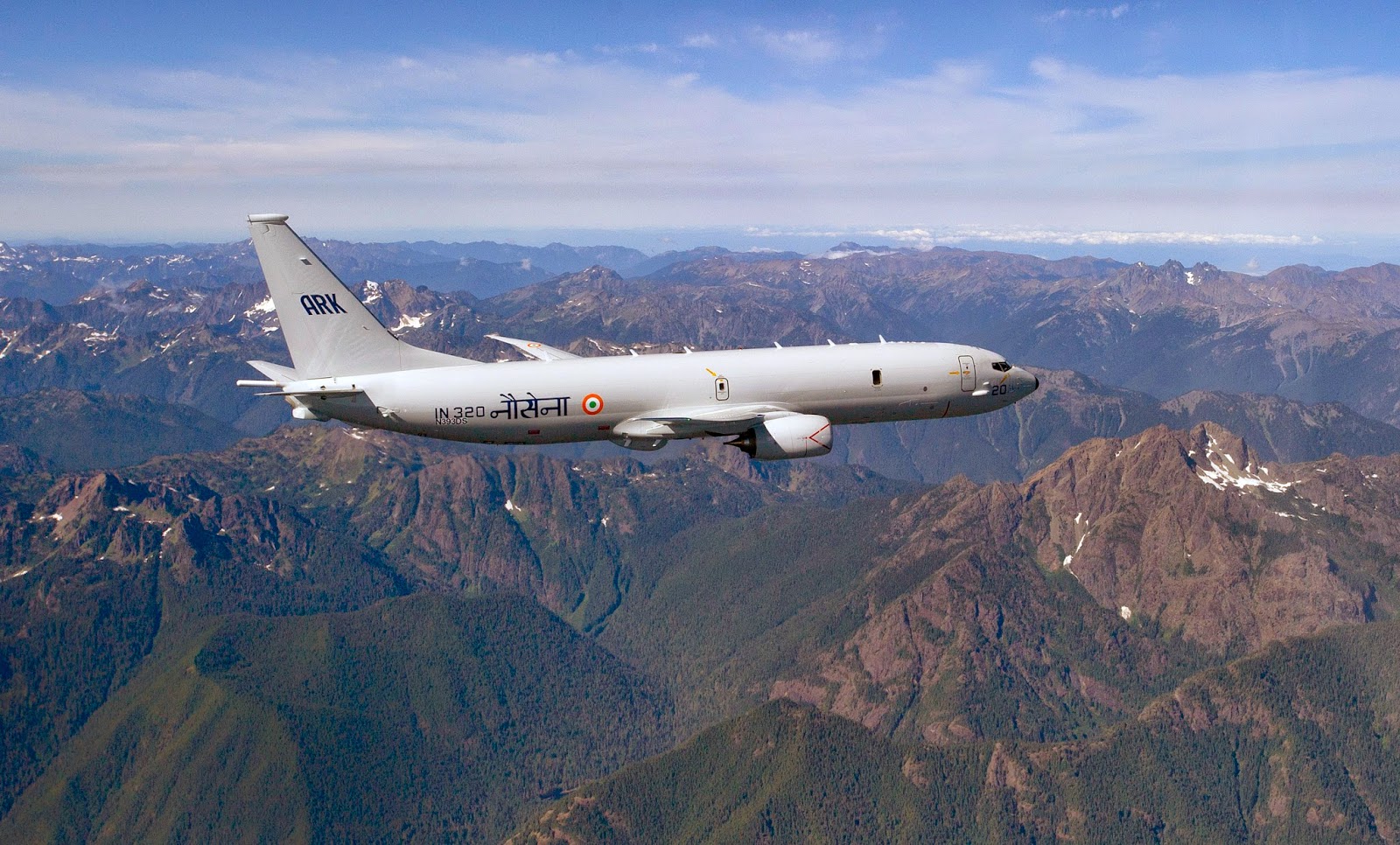
P-8I delivered to Indian Navy touches down


India's long-range maritime snooping and anti-submarine warfare capabilities will get a huge boost when the first of the eight contracted Poseidon-8I aircraft touches down at the Arakkonam naval air station in Tamil Nadu on Wednesday.

Under the $2.1 billion deal inked with US aviation major Boeing in January 2009, the second and the third P-8I aircraft will reach the naval air station INS Rajali in August and November, with the other five being progressively delivered by 2015. India is going in for a repeat order of four more P-8I in a contract worth over $1 billion.

Monday, 13 May 2013

India, US to jointly develop, produce defence equipment


 Washington and New Delhi are firming up "practical projects" for joint development and production of defence equipment in India to take the defence relationship between the two countries to the "next level", US Deputy Secretary of State William Burns disclosed Friday.
        "We have made some concrete suggestions about areas in which we think co-production and co-development would make sense for both countries, and we just need to sort through the practicalities of that with our Indian counterparts," Burns, who met Prime Minister Manmohan Singh on Friday, said.

Read more at:http://www.indianexpress.com/news/india-us-to-jointly-develop-produce-defence-equipment/1114404/

Friday, 10 May 2013

India launches Rs 13,000 crore IAF aircraft project involving private sector


Indian AirForce Avro

     India has kick-started another mega defence project by floating the global tender for the over Rs 13,000-crore acquisition of 56 transport aircraft to replace the ageing Avro fleet of IAF. The project, under which the first 16 aircraft will be bought off-the-shelf and the rest 40 will be manufactured in India, breaks new ground by specifying that the foreign aviation major eventually selected will have to tie-up with an Indian private sector company to produce the planes. 

       Defence PSU, Hindustan Aeronautics Ltd (HAL), which has a virtual monopoly in the military aviation arena, is being kept out of this project. The tender, or request for proposal (RFP), was issued to eight aviation majors — Embraer, Lockheed Martin, Airbus, Ilyushin, Casa, Saab and Alenia Aeronuatica — on Wednesday. Incidentally, Alenia Aeronautica is part of the Italian conglomerate Finmeccanica, which is facing charges of paying bribes to swing the Rs 3,546-crore contract to supply 12 VVIP helicopters to India in favour of its UK-based subsidiary, AgustaWestland.
Read more at: TimesofIndia

Thursday, 9 May 2013

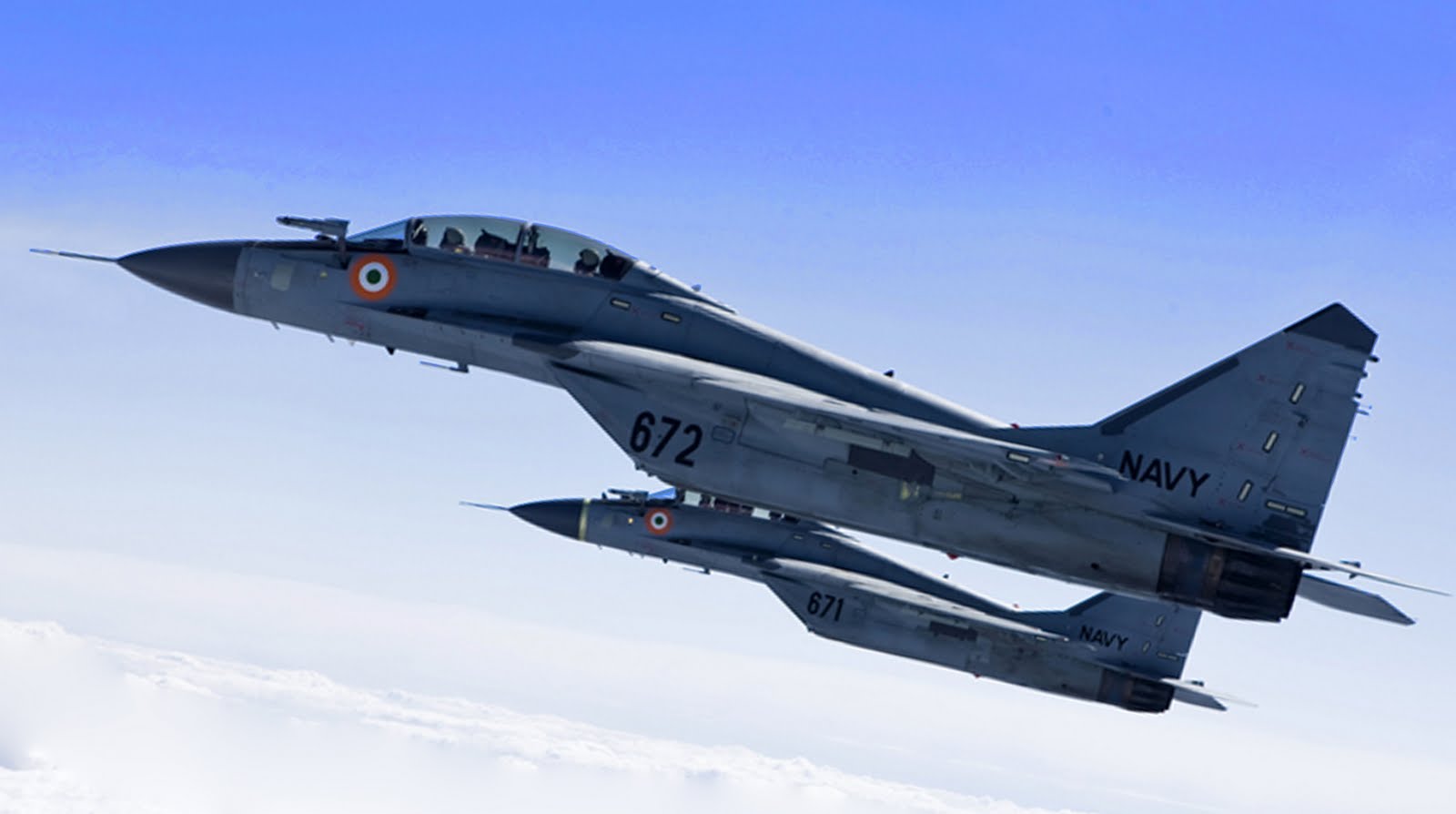
Anthony to commission MIG-29 K fighter planes into Navy


 Union Defence Minister A K Anthony will commission MIG-29 K fighter planes into the Indian Navy on May 11 in Goa. The squadron, named INAS 303 Black Panthers, will be commissioned on May 11 by the Defence Minister at INS Hansa Naval base in the state, Indian Navy PRO said. 


         The MIG-29K (K stands for ‘Korabelny’ meaning “Carrier Borne” in Russian) is a potent carrier borne fighter, which, once integrated with ‘INS Vikramaditya’ will bolster the Navy’s punch with its multi-role capability, the PRO said. The aircraft, armed with its arsenal of weapons, including advanced anti-aircraft and anti-ship missiles, precious bombs and sophisticated systems to support weapon delivery, will not only be able to dominate the air in all spectrum of conflict but simultaneously project power to meet the nation’s military objectives.        
     Source:TheHindu

Monday, 6 May 2013

Navy set to receive the first P 8I aircraft from Boeing


Indian Navy P 8I during its first flight
The Indian Navy is all set to acquire its first US-made long-range maritime patrol and ASW aircraft to counter the growing influence of China in Indian Ocean Region(IOR), .  The first of the aircraft, known as P8I Poseidon, is expected to land in India around May 15, said an Indian  Navy official. 
      The  aircraft will be based in INS Rajali, a naval base on the Tamil Nadu coast. With a range of about 8600 km and an endurance of 10 hours, P8I Poseidon can fly non-stop up to Australia – much beyond India’s neighbouring maritime zones – and augment Navy’s surveillance capability by leaps and bounds.  


      India is buying eight P8I ,from Boeing, at a cost of $2.1 billion. These aircraft will replace the Russian Tu-142 of Indian Navy, inducted 25 years ago. The Navy will receive the first three in 2013 and the remaining five will arrive by 2015. India is the first customer of P8I, outside the USA. New Delhi is negotiating with Washington to buy four additional P8Is from Boeing for further expanding its maritime footprint. Acquisition of 12 P8I will complete the first phase of the Navy’s requirement of 24 long range maritime reconnaissance aircraft.

Saturday, 20 April 2013

Indian Navy to acquire five self-propelled Fleet Support Ships


To further bolster its blue water capabilities, the Indian Navy plans to acquire five self-propelled Fleet Support Ships (FSS) that should be capable of transferring all types of stores, ammunition, fuel and personnel to naval units while underway at sea. 
        According to the Request for Proposal (RFP) issued recently, the Navy wants the FSS to be able to perform a 60-day mission with the capability to operate for an extended mission on requirement and be able to endure a trip of 12,000 nautical miles at a speed of 16 knots. The FSS should have a service life of 30 years, be capable of operating helicopters in extremely rough and cyclonic sea conditions and should possess ballast capability. Sources said the RFP, issued under the “Buy Global” category, is expected to elicit responses from some of the large shipyards around the world. Indian shipyards like Mazagon Dockyard, Garden Reach and the Cochin Shipyard have their hands full and need expertise to undertake such ventures. Sources said the process to acquire five FSS could take another three years to reach a final stage after negotiations, and extensive field trials.
           Larger blue water navies tend to have large auxiliary fleets comprising longer-range fleet support vessels designed to provide support far beyond territorial waters. Smaller navies tend to have smaller auxiliary vessels, focussing primarily on littoral and training support roles.
Source:TheHindu

Thursday, 11 April 2013

Israel set to bag another mega Indian defence deal


Israel is all set to bag a Rs 15,000-crore Indian mega defence deal to equip all 356 infantry battalions of the Indian Army with third-generation anti-tank guided missiles (ATGMs) which is currently under a strong challenge from the US to remain the second largest arms supplier to India after Russia.
     The project will involve an initial direct acquisition of the man-portable "tank killers", with a strike range of 2.5-km, followed by transfer of technology to defence PSU, Bharat Dynamics Ltd , for large-scale indigenous manufacturing. 
       The Defence Acquisitions Council (DAC) of India, led by the Union defence minister, Mr. A K Antony, took up the procurement of the fire-and-forget Israeli "Spike" ATGMs for clearance on April 2. But the case was kept "pending" after being referred for "a technology scan" since it was "a single vendor situation" without any competition, said sources. The DAC can approve acquisition of a state-of-the-art weapon system, aimed to gain a qualitative edge over adversaries, in a single-vendor situation only after "a technology scan" is conducted by HQ IDS (integrated defence staff) in consultation with DRDO. "The scan basically certifies it's not possible to get the weapon system from anywhere else. The DAC will consider the case after the scan," said a source.
         The 1.13-million Army is pushing the "critical" project since it has a huge shortfall of 44,000 ATGMs of different types, half its authorised inventory at present. Moreover, both Pakistan and China — the latter with third-generation ATGMs — have zoomed ahead in this capability of stemming enemy armoured attacks.
         The "buy global" project for the shoulder-fired ATGMs had begun — after DRDO failed to deliver an indigenous system — with the Israeli Spike being pitted against the American FGM-148 Javelin missiles. But the US could not assure India of providing full ToT to allow indigenous production. Consequently, only the Spike ATGMs underwent extensive field trials conducted by the Army. The force is keen to begin inducting the new ATGMs soon to ensure each infantry battalion deployed in the plains has eight ATGM launchers (each with 12 missiles), and those in the mountains have at least two, by the end of the 12th Plan (2017). "Even mechanised infantry battalions will get them later," said the source.
          At present, the Army is making do with second-generation Milan (2-km range) and Konkurs (4-km) ATGMs, produced by BDL under licence from French and Russian companies, which are wire-guided and do not have fire-and-forget capabilities. 
          A part of the deficiency will be met by the induction of the long-delayed indigenous third-generation Nag ATGMs, which are vehicle and helicopter-mounted, with a 4-km strike range. The Army has already placed an initial order for 443 Nag missiles and 13 Namicas (Nag missile tracked carriers).

Sunday, 7 April 2013

US aircraft maker Textron eyes India's defence space


         American aircraft and rotorcraft maker Textron, known for its Bell range of helicopters, is looking to broaden its India footprint by entering the lucrative defence space, which could see an investment of $100 billion over the next decade on military hardware. 
        
          According to Connor, rotorcraft that fits the needs of Indian military, state governments and paramilitary forces are the new Bell 407 armed version and Bell 429 twin-engine. "Bell-525, currently under development, is a potential product for the military and state government needs it later." Bell helicopters are mostly used for civil and commercial flying purposes in the country.